
When the Exceptional Becomes Familiar – How the Nervous System Stores Force
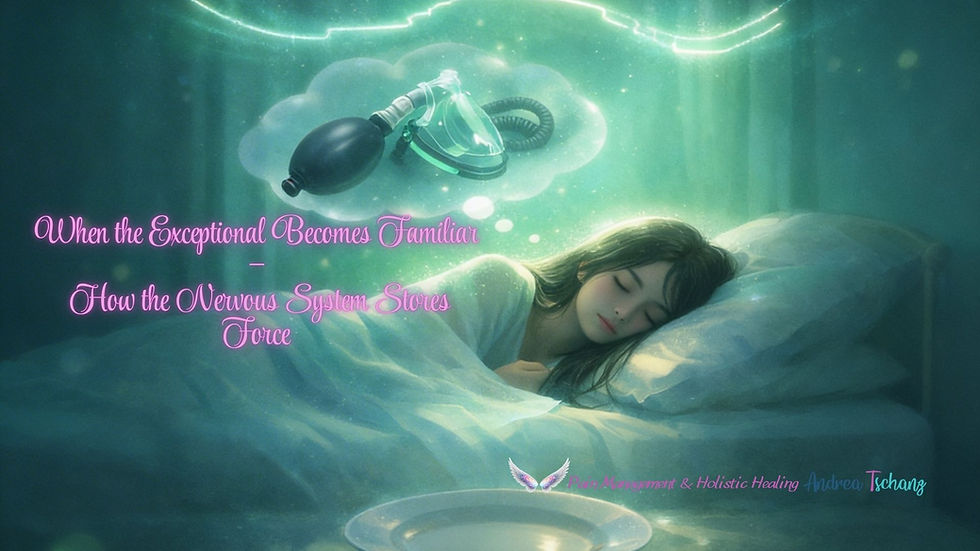
When the exceptional becomes familiar, it can sound gentle. In this story, familiarity grows through repetition, and repetition grows through being directed from the outside. You are in rooms that function the same way again and again. You are positioned, washed, treated, soothed. You hear sentences that promise safety while the body already registers: consent carries little weight here. Care is present in the room, and alongside it stands strictness. Both wear white aprons.
Care and Strictness in the Same Room
A child experiences this as atmosphere. Six beds in a room. Curtains. Footsteps. Metal. Questions may be asked. Answers come. Small tasks are appreciated. A thank you can feel warm. At the same time, routines run on rails. Plates are emptied. Midday rest. Night silence. Positions that are set. The body learns early: adapting keeps the flow calm. And it learns something else as well: boundaries seek an expression when words fade away.
Sleep as a Threshold Where Control Shifts
Later, the same mechanism appears at another threshold. An anteroom before the operating theatre. Green. Masks. Eyes that look kindly, sometimes with that touch of humor that seems to send fear out the door. Then the mask. The black balloon. Breath filling it. Transition. A moment where steering is handed over, even while every muscle wants to stay. Sleep becomes a threshold that costs control. And years later, lying in your own bed, that threshold can be felt again, as if it were a room that could open at any time.
When the Body Makes Boundaries Visible
And then there are reactions that read like medical chapters in everyday life. Allergies. Circulation. Skin. The body draws lines. Stabilizers are everywhere. Exactly there an allergy forms. Onions and garlic tip the circulation. Herbs trigger blisters. It feels like restriction, and at the same time something becomes clear: a no suddenly stands firm. The body takes over the negotiation.
When the Exceptional Becomes Familiar — and Returns Later
Across these three layers runs one shared trace. Hospital as a place that carries and compels at once. Sleep as a transition that costs steering. Symptoms as a language that makes boundaries visible. The nervous system stores more than images. It stores tone, tempo, smells, obligation. It also stores the repeated overriding of “I want.” And it calls up that stored charge later as soon as a situation feels similar—sometimes in places that outwardly have nothing to do with one another.
How Change Becomes Possible When the Usefulness Has Passed
Here begins the part that goes beyond remembering. Much of what the nervous system stores once serves a purpose: it helps you survive, function, endure. It keeps the flow calm. It protects when words have no place.
Change becomes possible right there. The story remains part of life, and the stored energy behind it keeps moving. As soon as it becomes visible what the body is protecting, the reaction releases. As soon as the nervous system takes in new safety, pressure eases and the former program steps back.
In my work, the focus rests on exactly this place: where a pattern once carried meaning and today opens space for transformation. Agency grows as cooperation with the body, as a return of steering.
You can find the previous blog here: https://www.schmerztherapie-andrea-tschanz.ch/en/blog.


Comments